Overview and Objectives
Description | Overview & Objectives | Teacher Prep | Protocols | Useful References
Equipment, Sources, and Timeline
 Project GROWS is an exciting
program (we like to think) that provides high
school students the opportunity to apply the principles and techniques of molecular
and population biology to original research on salmon population genetic
structure (see also Invasive Mussel Project).
There is a tremendous need for innovative, inquiry-based curricula in secondary
schools that both engage students in the scientific process and provide them
with the opportunity to do original research. In Project GROWS we have developed a curriculum in which advanced biology students utilize the latest
molecular techniques to characterize genetic variation in salmon populations.
The curriculum articulates nicely with many biology curricula in the Pacific
Northwest that contain significant elements devoted to salmon biology and it
brings molecular biology to bear on an important environmental problem. We envision
this project, and projects like it, as providing a capstone experience for many
high school students. This website provides most of the information you
will need to perform the project with your students. See Teacher
Prep, Protocols, and Equipment,
Sources, and Timeline to get started.
Project GROWS is an exciting
program (we like to think) that provides high
school students the opportunity to apply the principles and techniques of molecular
and population biology to original research on salmon population genetic
structure (see also Invasive Mussel Project).
There is a tremendous need for innovative, inquiry-based curricula in secondary
schools that both engage students in the scientific process and provide them
with the opportunity to do original research. In Project GROWS we have developed a curriculum in which advanced biology students utilize the latest
molecular techniques to characterize genetic variation in salmon populations.
The curriculum articulates nicely with many biology curricula in the Pacific
Northwest that contain significant elements devoted to salmon biology and it
brings molecular biology to bear on an important environmental problem. We envision
this project, and projects like it, as providing a capstone experience for many
high school students. This website provides most of the information you
will need to perform the project with your students. See Teacher
Prep, Protocols, and Equipment,
Sources, and Timeline to get started.
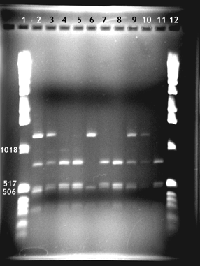
In Project GROWS, students use DNA fingerprinting techniques (RFLPs) to characterize the genetic variation in and among dwindling salmon populations. Students can collect fin clip tissue, extract DNA, amplify the DNA using PCR, and digest the amplified PCR products. The resulting RFLPs provide the students with genotype data they can use to examine some fundamental questions related to population genetics and conservation biology. Using these data, students can ultimately examine a vast array of questions related to salmon biology and management such as: 1) What is the population structure across the region? 2) How much genetic variation exists in different streams; how is this variation related to drainage location or population size? 3) What is the population structure of different populations across time, e.g. are different year classes in the same stream genetically distinct? 4) What is the genetic impact of hatchery fish on wild populations?
OUR ULTIMATE PROJECT OBJECTIVES
- Introduce the principles, techniques and beauty of molecular biology
and population genetics.
- Generate a database that students can use to answer questions about
the dynamics of gene frequency differences and changes over broad geographic
and temporal scales in salmon, a group that is economically and historically
important, and is of special conservation concern.
- Explore how these data are useful in answering questions related to
basic salmon population biology and how they might impact decisions made
by fisheries managers.
- Demonstrate the benefits of collaboration with peers both at their own
school and at schools around the state. Classrooms will be networked through
the Internet and collaboration between schools will be actively encouraged.
- Expose students to a broad range of scientific perspectives and potential
careers by providing classrooms with professional mentors drawn from a
pool of graduate students, professors, and researchers from government
agencies and private industry working on related issues.
- Link environmental science and biotechnology programs so that students
in different classes within a school can collaborate.
- Develop a web site with curricula, protocols and problem sets for students
which will allow students to access previously collected data
and compare their data with that collected from other streams around the state.
- Hold a year-end symposium where students, mentors and other professional researchers will present talks on their work, providing students with the opportunity to participate in a forum where scientific results are disseminated, and to interact with professionals.
Description | Overview & Objectives | Protocols | Data Sheet | Useful References