Project GROWS
Description | Overview & Objectives | Teacher Prep | Protocols | Useful References
Equipment, Sources, and Timeline

|
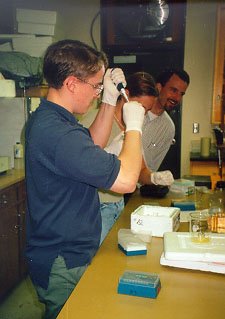
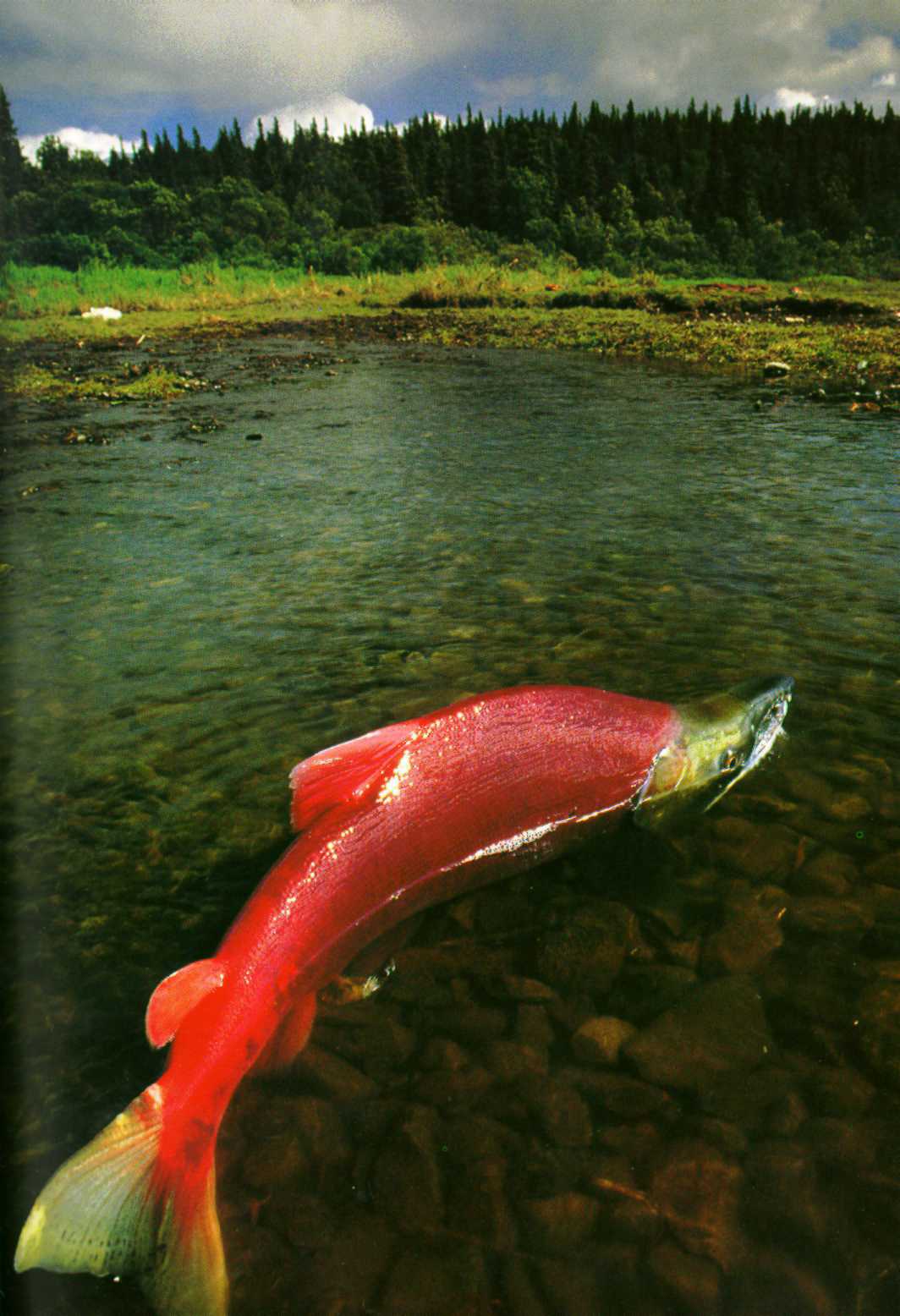
This project grew out of a desire by some teachers to involve their students in more authentic research, and to engage them in molecular work that addressed an important environmental issue. To achieve these ends, Project GROWS is being developed. More than 20 schools in western Washington were involved with the project last year ('01-'02). The project had a coordinator last year, but will need to be taken on by interested teachers in the future. This website provides most of the information you will need to perform the project with your students. See Teacher Prep, Protocols, and Equipment, Sources, and Timeline to get started. In GROWS, students learn molecular techniques at the same time as they examine genetic variation in one or more salmon populations. Students can collect tissue, extract DNA, conduct PCR and RFLPs to generate DNA fingerprints for their salmon. Some classes have devoted months to the project, others a few weeks. Student response has been very enthusiastic. The project is very flexible and we hope that you will be able to adapt it to your needs. Most of the curricula that teach students molecular biological techniques do so either by using plasmids or through human genetics. Molecular techniques can be used to address a much broader spectrum of issues, for instance, questions related to conservation biology or the evolutionary relationships between groups of organisms, or to assay the vast world of unseen organisms that occur in water, sediments, soil, and even guts. Why Population Genetics? Why Salmon? One very important application of molecular methods is the examination of population level genetic variation, especially in organisms that are threatened or endangered. Salmon are wonderful organisms for students to examine because they are tasty, and thus familiar, they are local and in the news, and their life history leads to more population differentiation than one finds in most organisms. Because they are economically important, a lot of effort has gone into finding genetic markers that are variable at the population level. We are lucky to have a number of mitochondrial and nuclear RFLP markers developed by researchers at National Marine Fisheries Service that can be resolved on agarose gels. Participating classes can enter their data into a database on this web site, and students around the world can view and analyze these data. |